Catégorie
Handheld 3D Scanning – Portable Digital Capture Technology
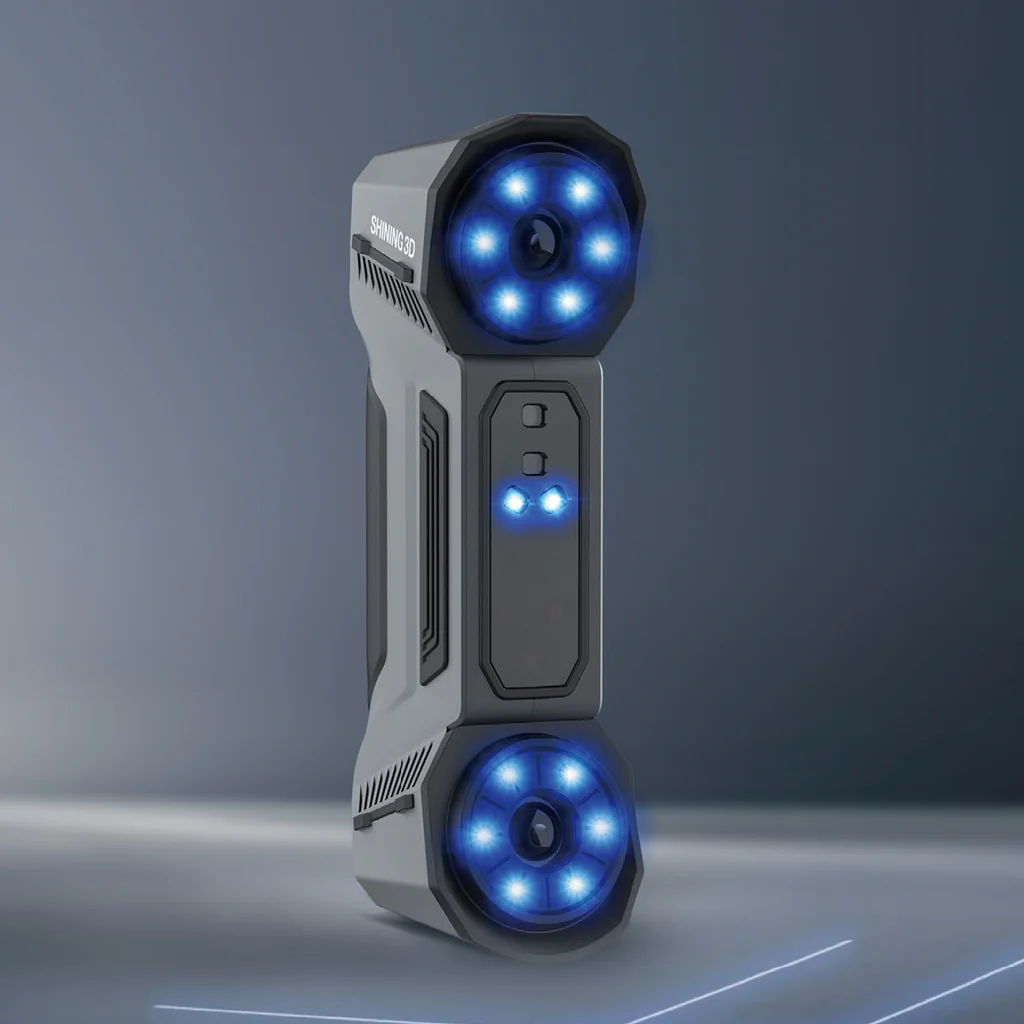
Handheld 3D scanning uses portable scanning devices to capture detailed three-dimensional models of physical objects and environments. This technology converts real-world geometry into accurate digital representations, supporting applications in design, engineering, and analysis.
How Handheld 3D Scanning Works
Handheld scanners use sensors such as structured light, laser, or photogrammetry to collect spatial data from surfaces. The device processes this information to generate a real-time 3D model that can be viewed and refined during scanning.
- Structured light and laser-based data capture
- Onboard or cloud-based processing systems
- Real-time 3D visualization of scanned objects
- Portable operation for flexible environments
Key Features of Modern Handheld 3D Scanners
- Onboard processing: Reduces reliance on external hardware
- Wireless connectivity: Enables mobile and remote operation
- Real-time feedback: Immediate visualization of scan quality
- High accuracy: Captures fine surface details and complex geometry
- Portability: Suitable for both studio and field use
Applications of Handheld 3D Scanning
Handheld 3D scanning is widely used across multiple industries for its speed and precision:
- Reverse engineering: Recreating physical parts into digital models
- Product design: Developing and refining prototypes
- Art and cultural preservation: Digitizing sculptures and artifacts
- Quality control: Comparing manufactured parts to design specifications
Importance in Modern Workflows
Compared to traditional measurement methods, handheld 3D scanning provides faster data acquisition, higher detail capture, and greater flexibility. It supports efficient digital workflows by enabling immediate integration with CAD and modeling software.
This technology makes high-precision 3D data capture more accessible across engineering, manufacturing, and creative industries.