Kategorie
3D Printing with Continuous Fiber Reinforcement (CFR) – High-Strength Additive Manufacturing
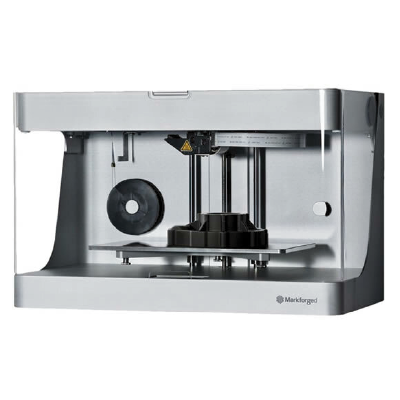
3D printing with Continuous Fiber Reinforcement (CFR) is an advanced additive manufacturing process that integrates long, continuous fibers into a thermoplastic matrix during printing. Using a dual-extrusion system, it combines structural polymers with high-strength reinforcement materials to produce exceptionally strong and lightweight components.
How Continuous Fiber Reinforcement Works
CFR technology embeds continuous fibers directly into printed thermoplastics layer by layer. Unlike short-fiber or filled filaments, this method maintains fiber continuity, significantly improving structural integrity and load-bearing capability.
- Dual-extrusion printing system
- Continuous fiber placement within thermoplastic layers
- Computer-controlled fiber orientation for strength optimization
- Compatibility with engineering-grade materials
Materials Used in CFR Printing
- Carbon fiber: High stiffness and strength-to-weight ratio
- Fiberglass: Balanced strength, flexibility, and cost efficiency
- Kevlar: High impact resistance and toughness
Key Advantages of CFR 3D Printing
- Exceptional strength: Parts can be significantly stronger than standard FFF prints
- High stiffness: Structural rigidity suitable for demanding applications
- Lightweight design: Reduced mass without compromising performance
- Material efficiency: Reinforcement only where needed
- Design flexibility: Enables complex geometries with engineered strength zones
Industrial Applications
CFR 3D printing is widely used in industries requiring high-performance, lightweight components:
- Aerospace: Lightweight structural parts and tooling components
- Automotive: Performance parts, brackets, and functional prototypes
- Industrial manufacturing: Jigs, fixtures, and custom production aids
- Engineering and RandD: Functional prototypes with near-metal performance
Performance Characteristics
Parts produced with CFR technology can achieve mechanical properties that approach or exceed those of lightweight metals such as aluminum, particularly in stiffness-to-weight performance. This makes CFR a strong alternative for applications where both strength and weight reduction are critical.
Continuous Fiber Reinforcement enhances additive manufacturing by enabling the production of durable, high-performance components for advanced engineering use cases.